The Benefits of Nandrolone (with evidence)

This is going to be more of a pondering than a report into self experimentation. So far I’ve taken a few small doses of Nandrolone Decanoate to judge its tolerability, and I’m about to start adding 50mg to my weekly testosterone injections. This is a quick explanation as to why I might want to do this.

After about 7 weeks of taking Testosterone Undecanoate at 250mg a week, I took a blood test as a quick interim check to see what my levels were. I didn’t do a full blood panel, I just checked total testosterone so I can adjust up or down accordingly before re-testing estrogen levels and all the other stuff that I’ll need to keep in range over the long-term. As you can see from the image below, my levels had doubled since the last blood test but were still a little lower than I was expecting from the dose. Ideally I’d want it to be into the “borderline high” area of the reference range: IE optimised without being supra-physiological.
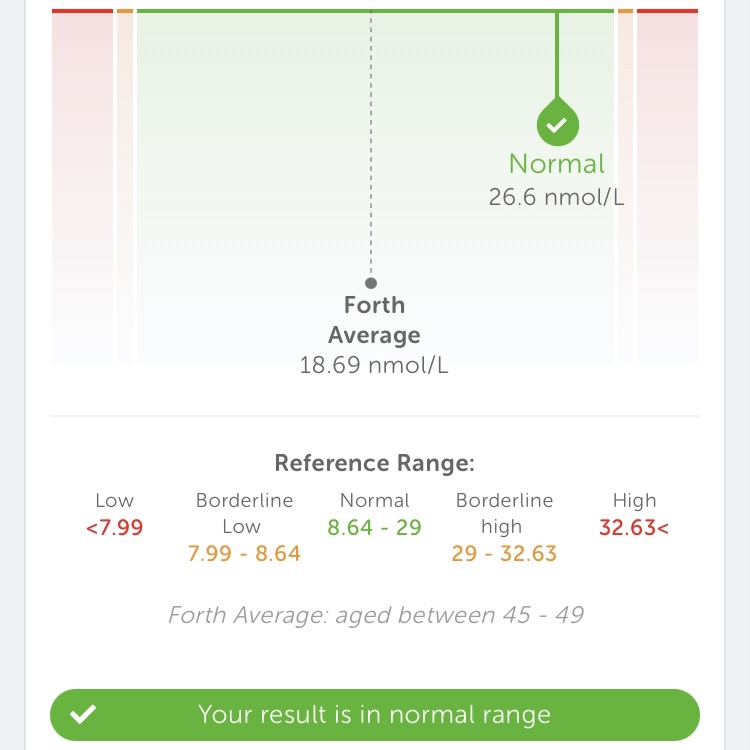
This unexpectedly low value could be caused by one or more of the following factors:

  • It could be that with such a long ester of testosterone, my levels hadn’t fully had a chance to stabilise. 7 weeks wouldn’t usually be long enough to achieve stable blood serum levels from such a long-acting ester but I had “front loaded” in the first few weeks and calculated that I’d have reached saturation by this point. However it’s possible that regardless of my diligence that dose by dose, week by week, the drug was still accumulating in my system
  • The “underground lab” I was using to supply the testosterone may have under-dosed the product leading to me taking a smaller dosage than I had intended
  • There’s some evidence to show that intramuscular injections into the medial deltoid might provide suboptimal bioavailability compared to administration into the ventrogluteal muscle. As I was rotating between these two muscle groups, half my shots might have had a less potent effect than the other half
  • The dose might have just been too low. There’s considerable variation from person to person regarding the relationship between dose administered and resulting blood serum levels. Maybe I excrete the drug faster than the average person or maybe my body cleaves the ester off the parent molecule less efficiently.

I decided to take the following actions and test again in 15 weeks:

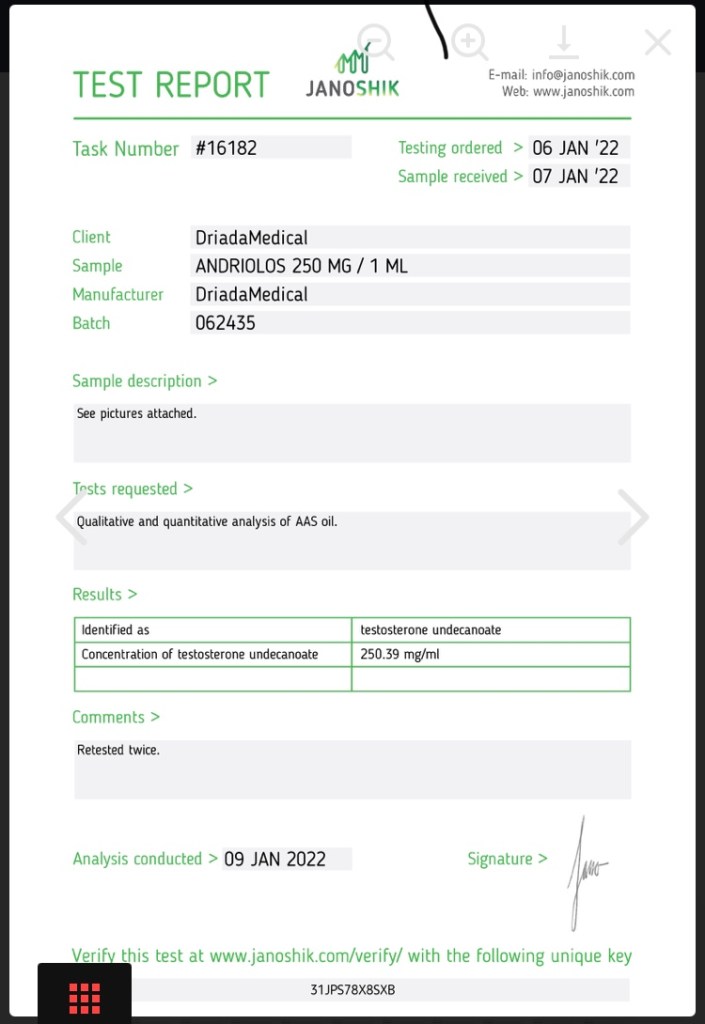
  • I switched to a supplier who provides traceable batch numbers and publishes lab test results for each batch
  • I’m standardising my injection site protocol: one week in the left ventrogluteal, one week in the right ventrogluteal, and repeat
  • I’m upping the dose from 250mg to 300mg per week
Anyone who’s familiar with scientific standards will have immediately spotted a red flag; the first rule of experimentation is to change one variable at a time. However two of the three changes I’m making to my protocol are more about standardisation than optimisation so will provide a good base to gain maximum insight into the next round of blood test results.

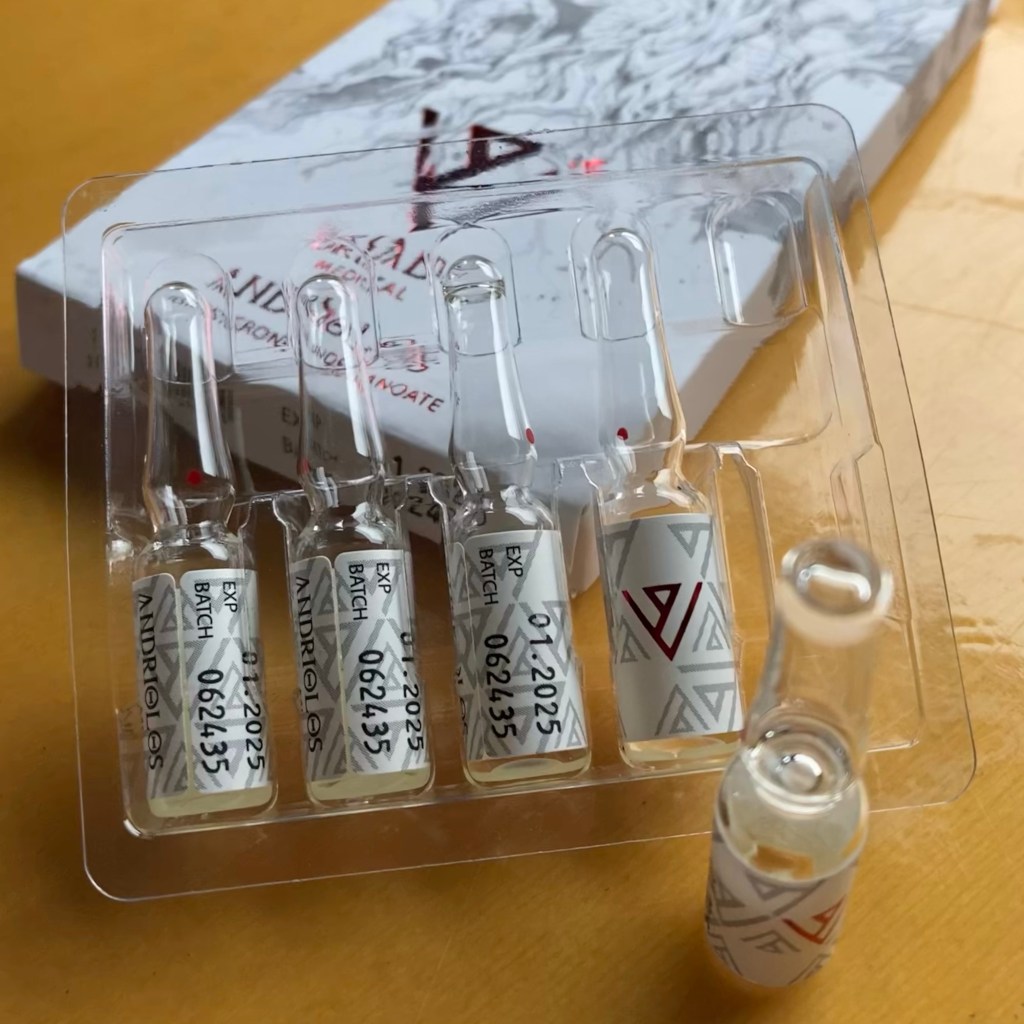
My new supply of testosterone is provided in handy 1ml, single use ampoules, each containing 250mg of testosterone undecanoate (providing 157.9mg of testosterone once the ester has been cleaved off by biological processes). The issue is that unlike drawing a dose of one’s choosing from a 10ml vial (how my previous supply of testosterone was packaged), I’m now stuck with dosing in multiples of 250mg.

One easy strategy to circumvent the ampoule size issue is to keep the dose the same and change the administration frequency instead. So if I want to increase my levels I can inject every 6 days instead of every 7. Conversely if I want to reduce my levels I can inject every 8 days. But there’s actually something else I can do which kills two birds with one stone in a particularly elegant way: I can top up the weekly dose with 50mg of Nadrolone Decanoate.
So why might I want to do this? Anecdotal reports from generations of athletes who dope with Nadrolone have made a pretty clear case that it has a significant effect on reducing joint pain. This has been backed up by clinical trials and the results are very convincing. As a 49 year old climber, my fingers are continually achey, creaky, and a bit crackly. Nadrolone might be the perfect remedy and I get the benefits for free as a result of tweaking my year-round testosterone protocol.

It’s not entirely clear why nandrolone has such a demonstrable effect on joint pain but there are two commonly cited hypotheses (yes I had to look up the pleural of “hypothesis”):

  1. It may potentiate collagen synthesis leading to cartilage deposition in the joints
  2. It’s a rather “wet” compound so the effect might be the result of increased synovial fluid production.

It would be great if point one was the case because increased collagen synthesis would also aid in tendon health, and therefore reduce the likelihood of a training-induced finger injury. Point two would suck because fluid retention (as we’ve discussed so many times so far) is bad for climbers who care so, so much about strength to weight ratio. The likelihood is that both hypotheses (I looked it up a second time to double check that it actually is the pleural of “hypothesis”) are correct and contribute to the beneficial effects on joints.
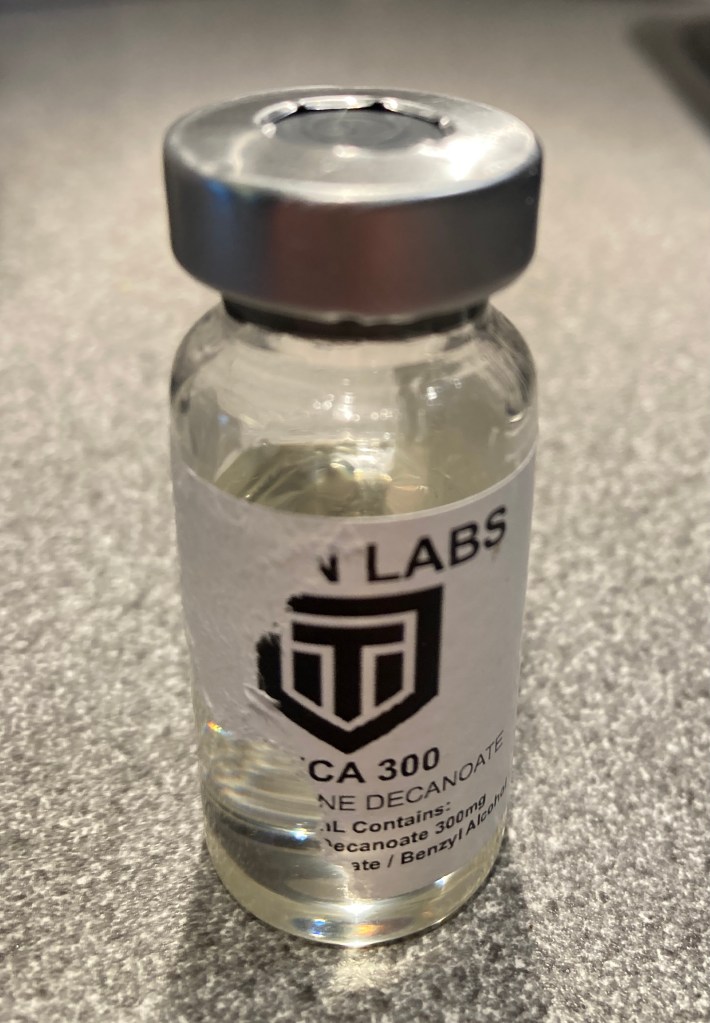
I shouldn’t have tried to pull the label off but I wanted to remove the unique verification QR code.

So if I’m upping my dose by adding a second compound, how do I know if I’ve reached my desired hormone level when I do my next blood test? Conveniently the ECLIA test employed by the service I use actually can’t tell the difference between nandrolone and testosterone, so the serum level i get back from them will actually be a combined serum level of testosterone and nandrolone. Convenient eh?

At this point everything seems to be falling conveniently into place. The half life of Nadrolone Decanoate is long enough that the two drugs can be administered with the same frequency, and therefore together in the same injection. Also nandrolone is actually present in small concentrations in both the male and female natural endocrine environment, so my protocol can still be classed (if anyone cares), as bio-identical hormone replacement.

There are however potential downsides to using nandrolone year-round: there are plenty of anecdotal reports of the drug causing depression, anxiety and increasing incidents of jealous, possessive ideation, and this has be backed up by research. These mental effects are usually reported at much higher doses than I’m planning to run, but it’s certainly something I’m going to be diligently looking out for. There is research to show that nandrolone messes with dopamine transport proteins and monoamine oxidase function. I don’t want to be fiddling with my brain chemistry in that way. Also as I alluded to earlier, nandrolone is notorious for promoting fluid retention in a dose dependent manner. Both of these issues are a good reason to stay around 50mg which is a very low dose in comparison to that taken by most athletes. Which brings me conveniently on to…

How do I know that the 50mg dosage necessary to top up my weekly testosterone protocol is enough to lubricate my finger joints? In short, I don’t. The Tatem, Holland, Lipshultz paper I linked to above presents evidence that “Deca” (as nandrolone Decanoate is colloquially known) was efficacious at reducing joint pain at a median dose of approximately twice that which I’m planning on taking. I have three grams of the stuff so I might as well give it a go. It may require some future fiddling, or my plan might not be feasible at all. I’ll start at 50mg a week because it fits into my protocol and play around with things if I need to. I think it’s more probable though that if I don’t get what I’m looking for at 50mg, or I experience depression or water weight, I’ll chalk it up to an interesting experiment and revert to testosterone only.

A quick note: many if not all of the anabolic steroids discussed in this blog have the effect of suppressing or “shutting down” natural testosterone production, but nandrolone particularly so. I wouldn’t have chosen to use it unless I was committed to long term hormone replacement. Restarting ones testicular production can be a lengthy and difficult process.

Testosterone Replacement (part one)

A quick note at the beginning. This article is really only relevant for cis men. I will be publishing content in the future which is more suitable for women, enbees, trans people, etc; in short you probably want to avoid androgenic hormones and focus on other performance enhancers such as peptides, SARMS, and weird-arse agonists of non-androgenic hormones.

I’ve been conducting what I cynically refer to as “phase one trials” with various performance enhancing compounds. Like the more organised and curated pharmaceutical namesake, the aim of my experiments have not been too fully understand the nature and effect of each compound – that takes time. It’s been more about ascertaining the approximate dose I may want to run in the future, noting tolerability (any obvious side effects for instance), and a getting rough “feel” for each drug. Let’s say it’s been about taking a shortlist of candidate compounds and making it shorter, and as I revisit each of them I’ll record my experiences here.

Many, if not all of the drugs I’ve been experimenting with have the effect of suppressing natural testosterone production. This is one of two reasons why I’ve been administering a weekly “base” of testosterone undecanoate throughout the whole venture. I’ll elaborate in a future post on the necessity of using testosterone while running synthetic anabolic steroids, but meanwhile let’s talk about the other reason as its a bit more considered and a bit more applicable to athletes.

When I decided to begin this journey the first thing I did was to test my natural levels of a bunch of hormones, liver enzymes, cholesterol biomarkers, and anything else that can potentially be effected by anabolic steroids. I’ve always found it pretty easy, if not too easy to put on muscle mass, so I was a little surprised when I found out that my testosterone levels were on the low side of normal.

Screenshot

This is what’s probably been happening: when you’re reliant on natural testosterone production your testicles (assuming you own testicles) squirt small amounts of the hormone into the blood stream throughout the day. Levels are highest in the morning and lowest in the late afternoon. The daily volume of hormone produced is reliant on many factors: BMI, age, diet, sleep, stress levels, and most importantly in my case how hard you’ve been training.

To a point, exercise increases natural testosterone levels but hard training sessions deplete natural production, leading to a kind of bell curve. Climbing five times a week at the age of 49 is almost as counterproductive to maintaining natural testosterone levels as sitting on the sofa watching daytime tv and eating pizza for breakfast. If you’re interested in maximising natural production a moderate load of exercise with frequent rest days is the way to go. This is something that Lattice Training (for instance), spend a lot of their time trying to convince their customers: less is more. Bit it’s something I want to push beyond.

So what’s so special about testosterone anyway? In the male body, as the primary anabolic hormone its responsible for promoting protein accretion in the muscle tissue, and this results in increased rates of recovery from exercise. As such, crashing your testosterone levels by over-training leads to reduced recovery rates and that’s an issue that can be hacked by supplementation with an exogenous source of hormone.

One important aspect to understand is that supplementing exogenous testosterone has the effect of shutting down your natural production. Your Hypothalamic–pituitary–gonadal axis (if you’re a cis male), senses that there’s enough testosterone floating around and doesn’t bother making more. So if administered intelligently (we’ll get into the details of that in a minute), you’ll replace the diurnal, pulsatile production of endogenous testosterone with a steady, constant source which remains optimal regardless of how often you train, if you’ve managed to have enough sleep, or if you couldn’t resist eating all 5 of those donuts in one sitting.

So what about the dose? The obvious assumption to make when supplementing testosterone would be to push into supra-physiological levels, IE somewhere above the 32.63 nmol/L cutoff that the blood testing service I use considers the upper end of their natural reference range (see diagram at top of page). After all if a moderate dose helps increase work capacity a little, then a less moderate dose must help a lot, right? Actually in climbing as in many other sports where power to weight ratio is a consideration, this isn’t actually the case.

In the a study titled “Testosterone dose-response relationships in healthy young men”, the researchers gave varying amounts of testosterone to men and measured their resulting weight gain. Higher doses led to more weight gain so if you’re trying to stay light then you want just enough testosterone to replace your natural level. That way, morning or evening, whatever your allostatic load, you’ll recover at a rate that’s optimal for you. Or if you already have a problem with recovering optimally, you can dial in your testosterone levels to near the top of the “normal” range to optimise recovery, and if you start putting on weight drop the dose until you reach a happy balance. This obvious requires regular testing, which you should be doing anyway if you’re taking exogenous hormones.

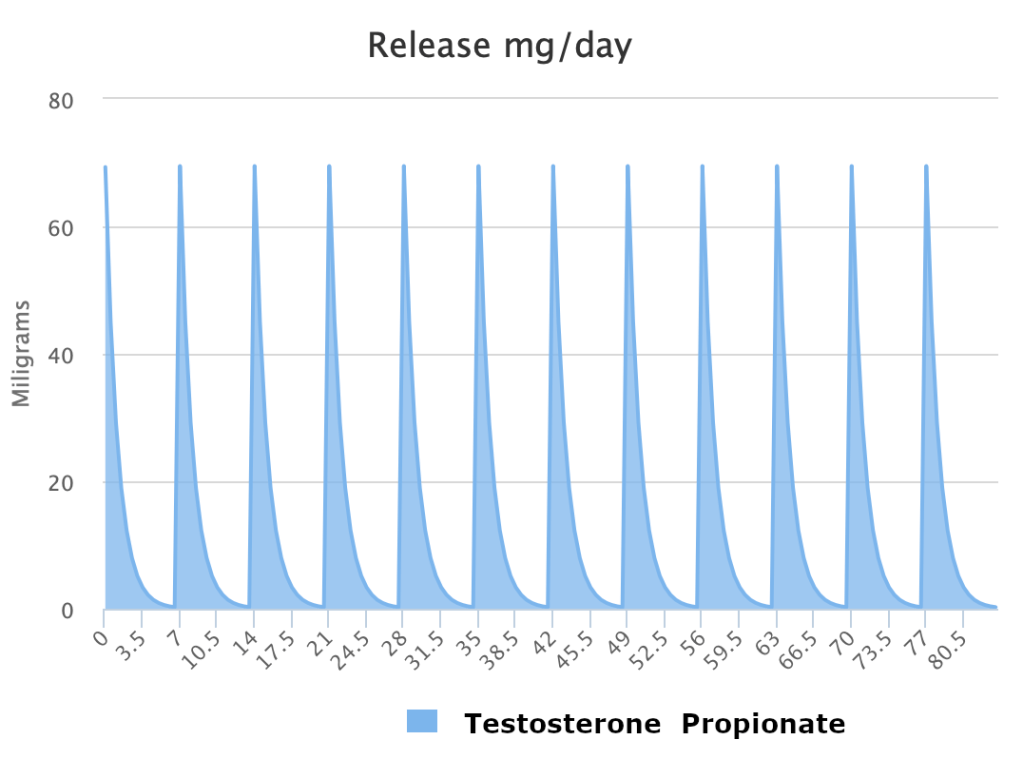
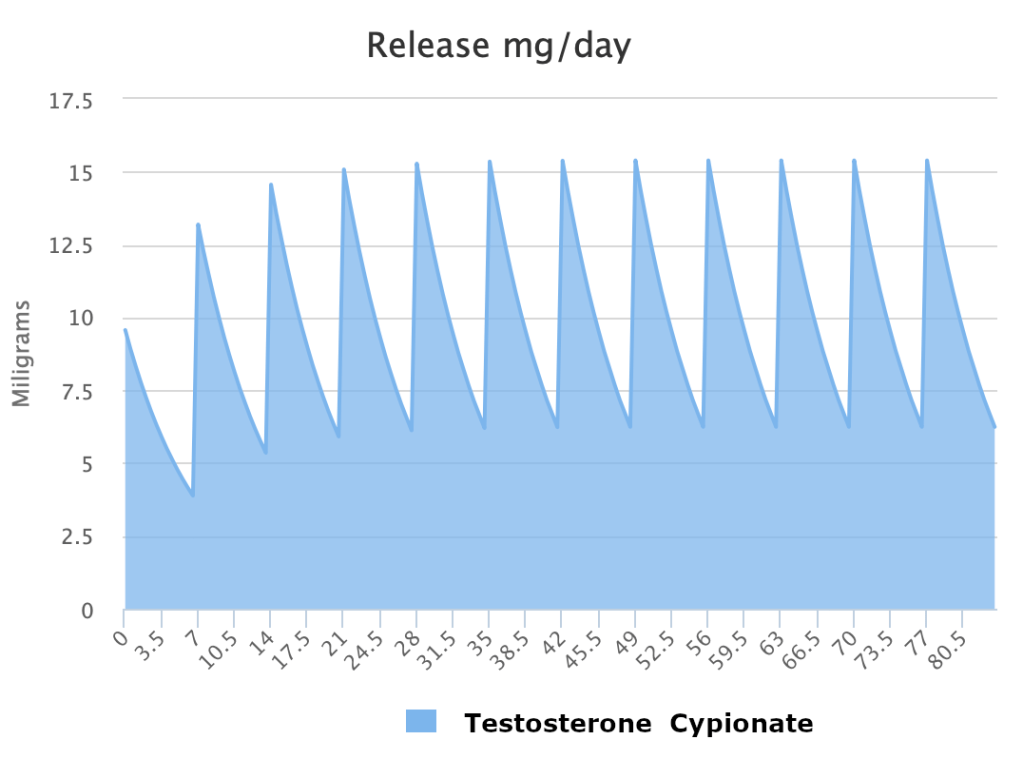
There are various esters of testosterone available. Different esters have different serum half lives. For instance if you inject testosterone propionate today, in 4.5 days time you’ll have half of it left in your system. If you inject testosterone cypionate, it will take around 8 days.

If you’re a competitive athlete concerned about the possibility of drug testing, a shorter acting ester may be more appropriate because it can be out of your system with minimal planning. A bodybuilder who goes on and off cycle might use a medium acting ester; that way when they’re finished with the cycle they don’t have to wait months for the drug to clear out of their system. But for me, as someone who’s planning to dial in the right dose and stay on it, it makes sense to use a long-acting ester as this will lead to the most stable levels. Seeing as what’s most important to me is unvarying levels, morning and evening, whatever I’m doing, the longer the half life the better.

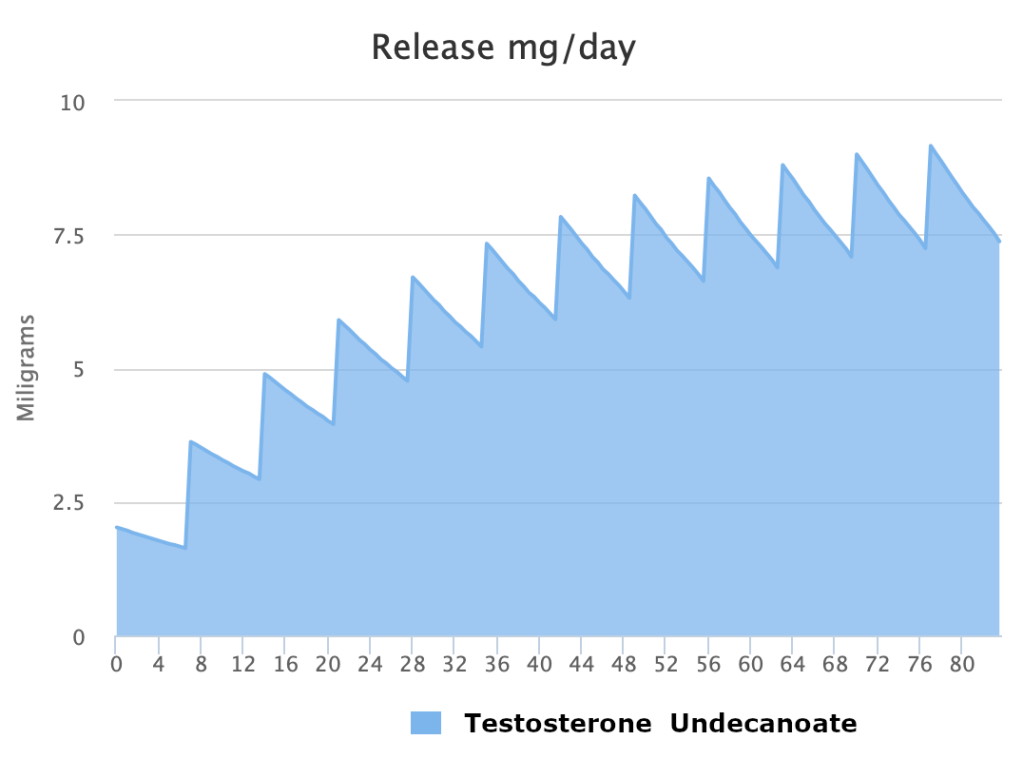
The longest acting ester I have access to is testosterone undecanoate so that’s what I use. With a half life of around 21 days it takes quite some time for serum levels to stabilise so it’s a long-term endeavour to test, tweak, test, etc. The plus side however is that it’s leads to extremely stable and unvarying hormone levels which is the point of the whole exercise.

Above are three screenshots from steroidplotter.com comparing blood serum concentrations of three different testosterone esters administered at 100mg once per week. As you can see the short-acting ester (testosterone propionate) takes no time to reach maximum blood serum concentration but by the end of the week there’s nothing left in the system. The long-acting ester (testosterone undecanoate) takes the full 12 weeks to reach stable blood serum concentration but is the most stable of the three showing similar levels at the beginning and end of each week. The medium acting ester (testosterone cypionate) is a compromise between the two extremes.

Regarding administration frequency, I was going to go into detail about the considerations around this but the post is already pretty long and detailed. I’m going to split the subject into a separate post and put it up when I’ve had more time to thoroughly research how changing administration frequency can be used to manipulate SHBG levels.

Many users administer testosterone undecanoate once every 8-12 weeks and although this is possible it leads to the same yo-yoing of hormone levels you’d get from more frequent administration of a shorter acting ester. Conversely I don’t love needles so injecting every day wouldn’t be preferable, in fact it would be a massive pain (quite literally) in the arse. Once a week seems to me to be a good compromise between convenience and stability, and leaves room to tweak up or down if necessary.

In summary, exogenous administration of testosterone, particularly frequent administrations of a long acting testosterone ester like undecanoate as a means of keeping testosterne at a pre-planned level at all times of the day, no matter what else is going on has significant effects on ability to recover. Which means you can train harder, wake up the next day with optimal levels, and do it again.

On a final note, it occurred to me while I was writing this post that it’s actually possible to use testosterone for the purpose of reducing hormone levels if needed. Why would you want to though? Say your natural levels were abnormally high and you had a problem with putting on muscle weight when you didn’t want to. Well, taking exogenous testosterone shuts down your natural production, so you could dial it in at a lower level than that which your tesicles would have produced and avoid the problem. Very hypothetical I know but fun to think about.